
Can You Have a Neutral Skin Undertone? My Thoughts as a Colour Analyst

Updated: Jul 8

A few months ago, I spent several hours creating a social media post comparing cool and warm shades of green in the same garment. Looking back, I'm not entirely sure why I decided to make life so difficult for myself. Finding identical clothing in every shade proved surprisingly challenging, as fashion brands tend to produce the same colours season after season.
Eventually, I found all the shades I needed for light, deep, and medium-depth colour types. The post performed exceptionally well, attracting a large number of saves and likes, and it remains one of my most popular pieces of content.
Among the many positive comments, however, one stood out:
"What about neutral undertone?"
My first instinct was to reply and explain that, in my own colour analysis approach, I do not recognise neutral undertones as a separate category. In my experience, people always lean either warm or cool, even if that tendency is subtle.
Then I thought: Why not write a blog post about it instead?
Before we continue, I want to make one thing clear. This article is not intended to challenge anyone else's colour theory, observations, or personal preferences. It is simply based on what I have consistently observed while analysing people's complexions.
If the concept of a neutral undertone works for you, that's perfectly fine. However, I personally find it unnecessary, and here's why.
Read later:
Does Neutral Undertone Exist in Colour Analysis? Can You Have a Neutral Skin Undertone?
The answer is complicated as I fully acknowledge that some complexions appear remarkably balanced and, at first glance, they can seem neither particularly warm nor particularly cool so, basically, that's what we would call a neutral undertone.
However, in my experience, when you examine these individuals carefully, their colouring always leans one way or the other, whether it's slightly warm or cool.
This is precisely why traditional seasonal colour analysis distinguishes between warm and cool seasons:
Winter and Summer lean cool.
Spring and Autumn lean warm.
The distinction exists because temperature is still present, even when it isn't the most obvious characteristic of the person's colouring. What I mean is if your main feature isn't undertone but your color depth or your colour saturation is quite high it can be so distracting that it'll be really hard to say, especially if you do your own colour analysis independently.
What Is Colour Analysis?
Colour analysis is the process of identifying which colours work with your natural colouring — your skin undertone, your depth, and the relationship between your features. It's not about which colours you like. It's about which colours make your skin look clearer, your eyes more vivid, and your overall appearance more harmonious and alive.
At Zazu Feu, we don't use the traditional four or twelve season system — a framework that was created more than forty years ago and that leaves a lot of people in categories that don't feel quite precise enough to be useful.
Instead, we use the Colour Flowers — six types defined by undertone (warm or cool) and depth (light, mid-tone or deep):
Periwinkle — Light & Cool
Columbine — Mid-tone & Cool
Hellebore — Deep & Cool
Buttercup — Light & Warm
Marigold — Mid-tone & Warm
Rudbeckia — Deep & Warm

Our new colour analysis system allows us to create hundreds of personalised colour palettes tailored to each client. This helps you shop more confidently, save money by avoiding costly mistakes, and make more sustainable choices.
Don't worry if that sounds a little confusing, we'll still refer to the more familiar colour seasons and standard descriptions throughout this post to keep everything clear and easy to follow.
Which Color Seasons Can Appear To Have Neutral Skin Undertones?
From a traditional seasonal perspective, the individuals most frequently described as neutral tend to belong to categories such as:
Bright Winter
Deep Winter
Bright Spring
Within the Zazu Feu system, I often observe this perception among certain representatives of the Marigold and Hellebore groups. These are people whose colouring can successfully wear a broader range of shades than average, which naturally creates the impression that they sit somewhere in the middle.

Marigold -
Mid-tone & Warm
Colour Flower

Hellebore -
Deep & Cool
Colour Flower
Why You May Think You Have a Neutral Skin Undertone
In many cases, you may think you have a neutral undertone simply because undertone isn't the dominant feature of your complexion.
Instead what you notice first can be your colour depth, saturation or contrast.
This is particularly common among Winter and Spring colour types.
For example, highly saturated colouring creates a sense of clarity and vibrancy. Because of this, both warm and cool colours may appear reasonably harmonious at first glance. However, even highly saturated complexions still lean either warm or cool beneath the surface.
The same principle applies to depth.
When someone's colouring is naturally deep, as is often the case with Hellebore types, many deep shades may appear acceptable regardless of temperature. Yet this does not mean undertone has disappeared. It simply means that depth is exerting a stronger influence on the overall appearance.
In other words, people often mistake "hard to identify" for "neutral."
When Skin Undertone Isn't the Most Important Feature Of Your Complexion
Some individuals display their undertone very clearly.
Take Beyoncé, for example.

Her colouring is highly saturated, but her warmth is equally noticeable. Neither characteristic overshadows the other.
Read later:
In other cases, undertone becomes a secondary or even tertiary characteristic: Selena Gomez.

In my colour analysis assessment, Selena has a cool undertone. However, before you notice her coolness, you are likely to notice:
Her colour saturation.
Her depth.
Her contrast.
This is why the most important features of her palette are colour depth and saturation rather than temperature/hue.
Within the Zazu Feu system, this is one of the reasons she belongs to the Hellebore group. Hellebores can successfully wear ochre yellows, which are considered quite warm in traditional colour analysis. However, strong oranges often become too warm and begin to overpower the complexion. Even when they are of the right depth, something feels slightly off anyway, like in this photo:

Here’s a chart showing the relative visual influence of these two celebrities:

But what about the draping videos on TikTok that prove neutral undertones exist? I hear you ask.
Why Social Media Draping Videos Can Be Misleading When Judging Undertones
You may have seen social media (TikTok especially) videos where a colour analyst places extremely cool fabric beside their client's face, followed by an extremely warm fabric, and then a shade somewhere in between.
Predictably, the middle option often appears to be the most flattering.
But this doesn't necessarily prove the existence of a neutral undertone.
Imagine testing someone's height by comparing them only with the world's tallest and shortest people. Most of us would appear somewhere in the middle but that doesn't make us "average" in every respect. Colour temperature works in a similar way.
The reality is that extremely cool and extremely warm colourings are relatively uncommon among us. Most people sit somewhere between these extremes.
Many of the individuals I analyse are:
Not extremely light or extremely deep.
Not strongly warm or strongly cool.
Not highly soft or highly saturated.
This makes self-typing particularly difficult because people often identify with several categories simultaneously while feeling completely certain about none of them.
Read our celebrity colour analysis cases:
Marilyn Monroe's Colour Analysis
Why I Created Zazu Feu Colour Analysis System
One of the reasons I developed the Zazu Feu colour analysis system is that the traditional four-season model felt too restrictive.
At the same time, systems with twelve, sixteen, or even more categories often felt unnecessarily complicated.
The challenge is that every individual possesses a unique combination of undertone, colour saturation, depth and contrast.
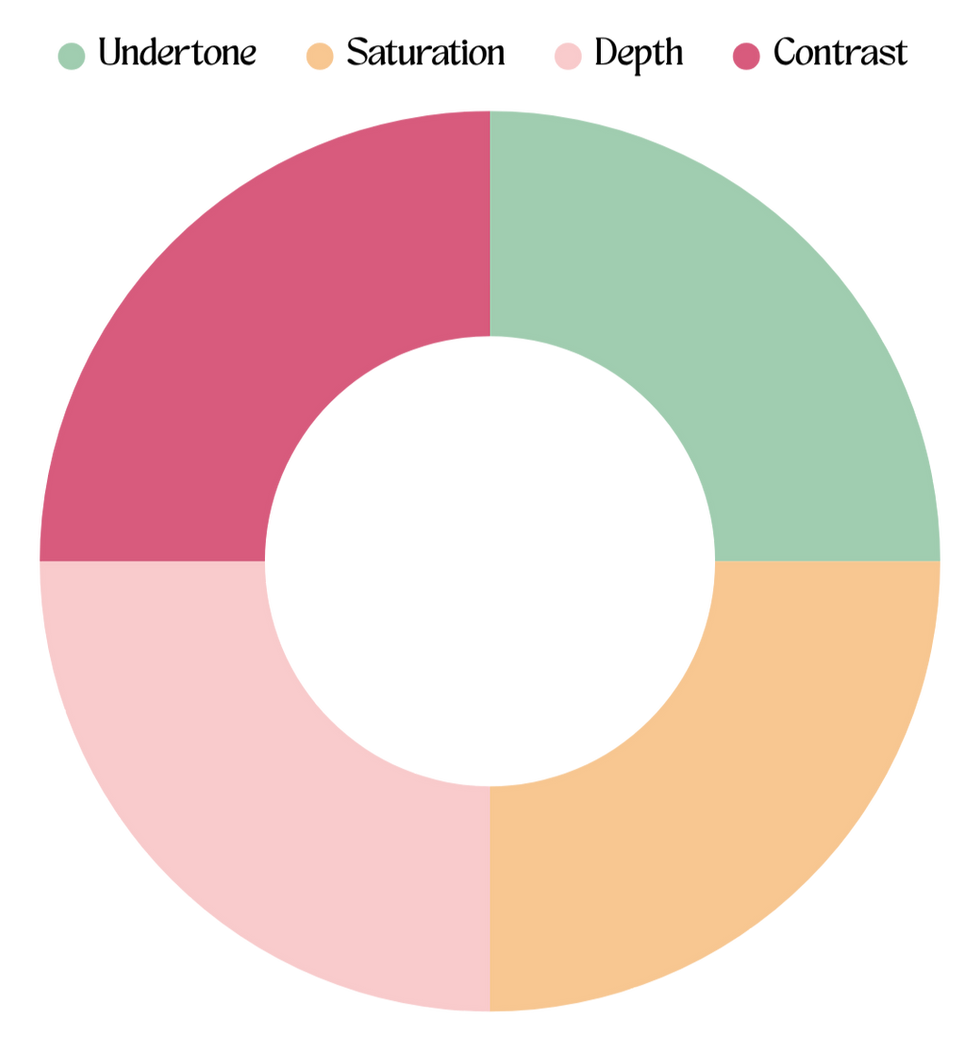
To create a separate category for every possible variation would require hundreds of colour types.
Instead, I took inspiration from nature because flowers can have countless variations while still belonging to the same family. The same principle applies to Zazu Feu.
If you are a Rudbeckia, for example, that does not mean you are identical to every other Rudbeckia. There are countless variations within the group. You may be slightly warmer or cooler. Slightly deeper or lighter. More saturated or more muted.
Your undertone may even appear close to neutral.
However, it will still lean sufficiently warm to harmonise with the colours contained within the Rudbeckia palette.
And that, ultimately, is why I do not find the concept of a truly neutral undertone necessary. What appears neutral is often simply a complexion where other characteristics — such as saturation, depth, or contrast — speak louder than temperature.
Read our clients' colour analysis cases:
What Personalised Colour Analysis Gives You
A Zazu Feu colour analysis isn't just a list of shades. It's a framework for every colour decision you'll make from the day you receive it — in shops, in your wardrobe, in makeup, in hair colour choices, in accessories.
It tells you:
Which neutrals actually work as neutrals for you because not all greys, navies and beiges are equal
Which accent colours will consistently make you glow
Which shades to avoid near your face and why
How light or deep your colours should be
Whether you suit warm or cool metals in jewellery
What your best hair colour direction is
The result is a wardrobe that works coherently rather than in isolated pieces.
Our Colour Analysis Services
At Zazu Feu, we offer three personal colour analysis packages: no AI colour analysis and all conducted online, which means wherever you are in the UK or worldwide, you can access a professional analysis without leaving home:
Bloom — our starting package, perfect if you're new to colour analysis and want a clear, expert result to begin working with.
Blossom — our most popular package, giving you a comprehensive colour analysis with detailed guidance across clothing, makeup and hair.
Flourish — for those who want to go deep. A complete colour analysis with the most detailed palette guidance we offer, for true colour devotees.

Learn more about our colour analysis services here:
All three involve submitting your draping photos through our submission form, which I then analyse professionally — not an algorithm, not an AI tool, but a trained human colour analyst looking at your actual colouring in natural light.
If you're not sure which package is right for you, take the free quiz first to get a feel for your Colour Flower, then browse the packages and see which level of detail feels right.
Zazu Feu is a colour analyst based in the UK, offering professional personal colour analysis online, using the unique Colour Flowers system.
Frequently Asked Questions About Neutral Skin Undertones
Can you have a neutral skin undertone?
In my colour analysis experience, every complexion leans either warm or cool, even if the difference is very subtle. Some people appear neutral because their depth, saturation, or contrast is more noticeable than their undertone, but a slight warm or cool bias is still present.
Why do I look good in both warm and cool colours?
Looking good in both warm and cool shades doesn't necessarily mean you have a neutral undertone. It may simply mean that your colouring isn't extremely warm or extremely cool. Factors such as colour depth, contrast, and saturation can make a wider range of colours appear flattering, even though one temperature will usually look more harmonious than the other.
Why do colour analysts disagree about neutral skin undertones?
Different colour analysis systems use different methods. Some recognise neutral undertones as a separate category, while others believe every person ultimately leans warm or cool. Neither approach is inherently wrong — it depends on the theory and methodology being used.
Which colour seasons are often considered neutral?
In traditional seasonal colour analysis, Bright Winter, Deep Winter, and Bright Spring are among the seasons most commonly described as having neutral or neutral-leaning undertones. These seasons can often wear a broader range of colours, creating the impression of neutrality.
Why is it so difficult to determine my skin undertone?
Undertone isn't always the most noticeable feature of your colouring. Your depth, contrast, or colour saturation may stand out first, making it harder to recognise whether you lean warm or cool. This is one reason many people struggle to identify their season without professional colour analysis.
Does having a neutral-looking complexion mean I can wear every colour?
No. Even if your complexion appears balanced, you'll usually find that certain shades make your skin look brighter, healthier, and more harmonious than others. Finding your best colours involves more than undertone alone.
How can I find out whether I lean warm or cool?
The most reliable way is through a professional colour analysis using high-quality draping photos taken in natural light. Alternatively, you can take the free Zazu Feu Colour Flower quiz to discover whether your colouring leans warm or cool before exploring a more personalised analysis.


