
What If You’re Not a Colour Season — But a Colour Flower in Colour Analysis?

It all started ten years ago. My friend Jess called me in tears.
“I’ve just paid a woman two hundred quid to tell me I look tired," she sighed. "Apparently I’m pale. And dull. And here’s the best part — she gave me a palette where every colour looks like it’s been washed with dishwater water.”
I tried to calm her down by explaining that colour seasons aren’t commandments, and no one has to obey them like gospel. But my friend felt cheated as if her personality had been actually removed and replaced with a watered-down version.
She’d been typed as a Soft Summer.
“Apparently,” she said, “I’m meant to wear the shade of withered moss.”
And I knew that it's not what she wanted. She admired Winter Colour Season in traditional colour analysis because they are deep, bold, striking and it'd be easy to buy clothes in those colours, as she thought.

Don't get me wrong: there’s nothing wrong with Soft Summer's colours. But Jess didn't want to work on how to use them in her actual real life. She was an inborn leader, working in the car manufacturing industry, managing the department of male web developers. She didn’t want to fade politely into the background. She was already just under 5 feet in height!
Years later, it makes me smile — because, guess what, Jess turned out to be a Hellebore, the deepest Colour Flower. Ta-da!
And even if someone truly is a Soft Summer… does that really mean they can never wear bright colours? Or black? Or light shades?
Life would be far too boring.
But then, why do you need colour seasons if you look good in much more than those palettes can offer? Let's have a look at a few good example.
Curious about your own Colour Flower and the colours that make your skin glow? Try free colour analysis quiz. It only takes a few minutes:

Who would ever say these women look terrible in black?
Only devoted seasonal colour adepts.
For the rest of the world, these women look absolutely stunning. So why aim to look “right” only in the eyes of such a tiny group of people?
In the Zazu Feu colour system, every colour type can wear black. It’s never about if — it’s about how.
Take Dita Von Teese.
She is widely admired and consistently described as impeccable in her appearance.

But what do seasonal colour purists say?
They argue she’s a light season — a Spring (freckles!), or a Summer — anything but a Winter or Autumn. So, they claim black hair doesn’t suit her, dark clothing overwhelms her, that she hides her “paleness” under layers of red lipstick and foundation.
Yes, Dita loves makeup. And yes, she once thought she looked pale in her younger years.
But haven’t we all thought that about ourselves at some point?
Now let's talk about Dita Von Teese's Colour Flower.
It's a Columbine — neither too dark nor too light, bang in the middle.

Periwinkle -
Light & Cool
Colour Flower
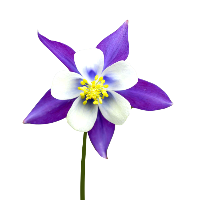
Columbine -
Mid-tone & Cool
Colour Flower

Hellebore -
Deep & Cool
Colour Flower

Buttercup -
Light & Warm
Colour Flower

Marigold -
Mid-tone & Warm Colour Flower

Rudbeckia -
Deep & Warm
Colour Flower
Dita is absolutely allowed to have dark hair. Her inky black waves may read as dramatic, femme fatale-like, but they perfectly match her personal clothing style and actually harmonise with her Colour Flower's palette!

And it's so important for all of us to never forget what we really are and what we want to show to this world. But still, in the most attractive way, of course.
