
Can Warm Undertones Wear Black? Our Colour Analysis Guide
Updated: Jul 5

Somewhere along the way, colour analysis decided that warm undertones and black don't mix. And if you've ever been told to reach for navy or chocolate brown instead of black for a big occasion, you'll know exactly how unsatisfying that advice feels when you're standing in front of your wardrobe on a Friday night.
Black feels like no other colour. No other shade quite replicates its energy; not the darkest grey, not the deepest navy, not even the richest warm brown. Sometimes that particular depth and drama are exactly what's needed. And being told it's not for you, simply because your undertone leans warm, has always felt like an overly simple answer to a genuinely interesting question.
So let's give it the answer it deserves.
What Color Analysis Usually Says About Black and Warm Undertones
Traditional colour analysis places black firmly in the cool and deep palette. It's the cornerstone colour for Winter types: dark, cool, high-contrast colouring where black feels completely natural. The logic is straightforward: black is a cool colour without any warmth in it, and cool colours sit most harmoniously against cool undertones.
For warm undertones — golden, peachy, yellow-based skin — the traditional advice is to reach for deep warm neutrals instead: chocolate brown, warm dark olive, deep burgundy with a warm base, rich caramel. These colours harmonise with warm undertones rather than contrasting with them.
And it's true; the colours that sit in the same tonal family as your skin genuinely do create a different, often more cohesive, more natural, effect than colours that contrast with it.
But harmony isn't the only reason we get dressed, right.
Why We Don't Completely Agree With Traditional Colour Analysis View
At Zazu Feu, we believe that colour analysis is a starting point for understanding yourself. It's not a set of rules that override your intentions, your mood, or the specific impression you want to make on a specific night.
Sometimes we want to look harmonious. Sometimes we want to look powerful. Sometimes mysterious. Sometimes truly unforgettable.
And for those moments, the traditional "avoid black if you're warm" rule misses the relationship between contrast, drama and desire.
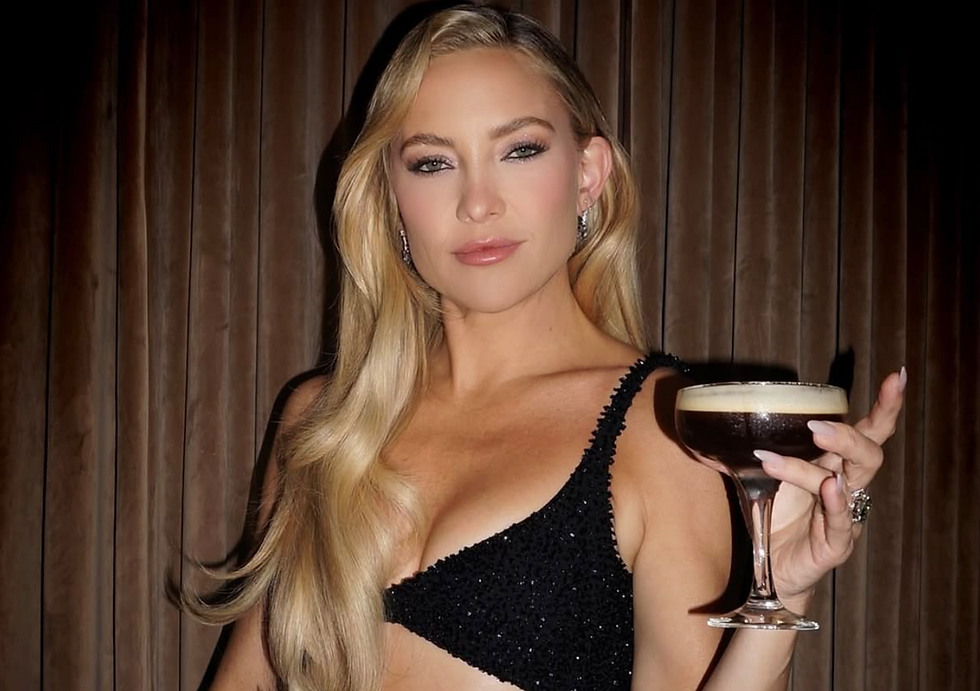
Black on warm undertones creates really nice contrast. And contrast (the right contrast, in the right context) can be one of the most striking things a person can wear. It's the visual equivalent of a statement because it usually says: I'm here.

Whether that's what you're going for is entirely up to you. But the idea that warm-toned people simply shouldn't wear black? We'd put that in the same category as telling someone with warm hair they shouldn't wear silver jewellery (because they can, the tone matters!).
Read also:
Let Us Introduce How We Think About Black at Zazu Feu
Rather than relying on the traditional four or twelve season system, at Zazu Feu we work with six Colour Flowers. It's a more nuanced and contemporary approach to colour typing that looks at three factors:
your undertone (warm or cool),
your depth (light, mid-tone or deep),
and how those qualities express themselves in your individual colouring.
The six Colour Flowers are:
Periwinkle — Light & Cool
Columbine — Mid-tone & Cool
Hellebore — Deep & Cool
Buttercup — Light & Warm
Marigold — Mid-tone & Warm
Rudbeckia — Deep & Warm

Black sits most harmoniously with the cool types (Hellebore in particular), which is the deepest cool Colour Flower and the one most naturally associated with black. But warm types (Buttercup, Marigold and Rudbeckia) have a far more interesting relationship with black than traditional colour analysis gives them credit for.
Not sure which Colour Flower you are?
Take our free colour analysis quiz — it only takes a few minutes.
The Same Colour, Two Different Effects: Cool vs Warm Skin in Black
Black doesn't create the same effect on everyone. The impression it creates changes completely depending on who is wearing it.
On cool, deep colouring — black feels:
Sophisticated. Timeless. Elegant. Refined. Natural. Like it simply belongs there.
On warm, golden colouring — black feels:
Contrasting. Dramatic. Powerful. Sensual. Deliberate. Like a choice rather than a default.

Neither is better. But they are completely different. This is why understanding which effect you want is far more useful than being told which one you're allowed to create.
Black on Cool, Deep Colouring: Hellebore
Hellebore is our deepest cool Colour Flower. It's rich, dark, and cool in undertone. In the seasonal system, Hellebore sits closest to Winter. And black is, without question, natural territory for Hellebore. It usually feels and looks so effortless that requires almost no thought which may come across as slightly boring.
Which is precisely why we'd rarely advise a Hellebore to wear an entirely black outfit to a party or special event.
Black looks so good on Hellebore types that it can become almost too predictable.
Take Keira Knightley — a Hellebore.

She looks good in black? Absolutely. Stylish, elegant, a little edgy. She's a beautiful woman and very little works against her. But does black feel festive on her? Does it feel like partywear? Not really. It looks polished. It looks like Keira Knightley. It doesn't feel like an occasion though 100%.
Now consider Salma Hayek — also a Hellebore.

Black satin, low décolletage, diamonds. Does she look good? Absolutely. Does she look ready for a party? Almost. But despite the glamour, there's still something slightly expected about it. Because Salma Hayek in black is something we've seen before, and brilliantly, many times.
For Hellebore types, black is the elegant choice and if you want to look stunning without attracting too much deliberate attention, black is your answer.
But if you want to be remembered? That's where choosing something else entirely... a deep cool jewel tone, a vivid purple, an unexpected emerald can really surprise people in the best way.
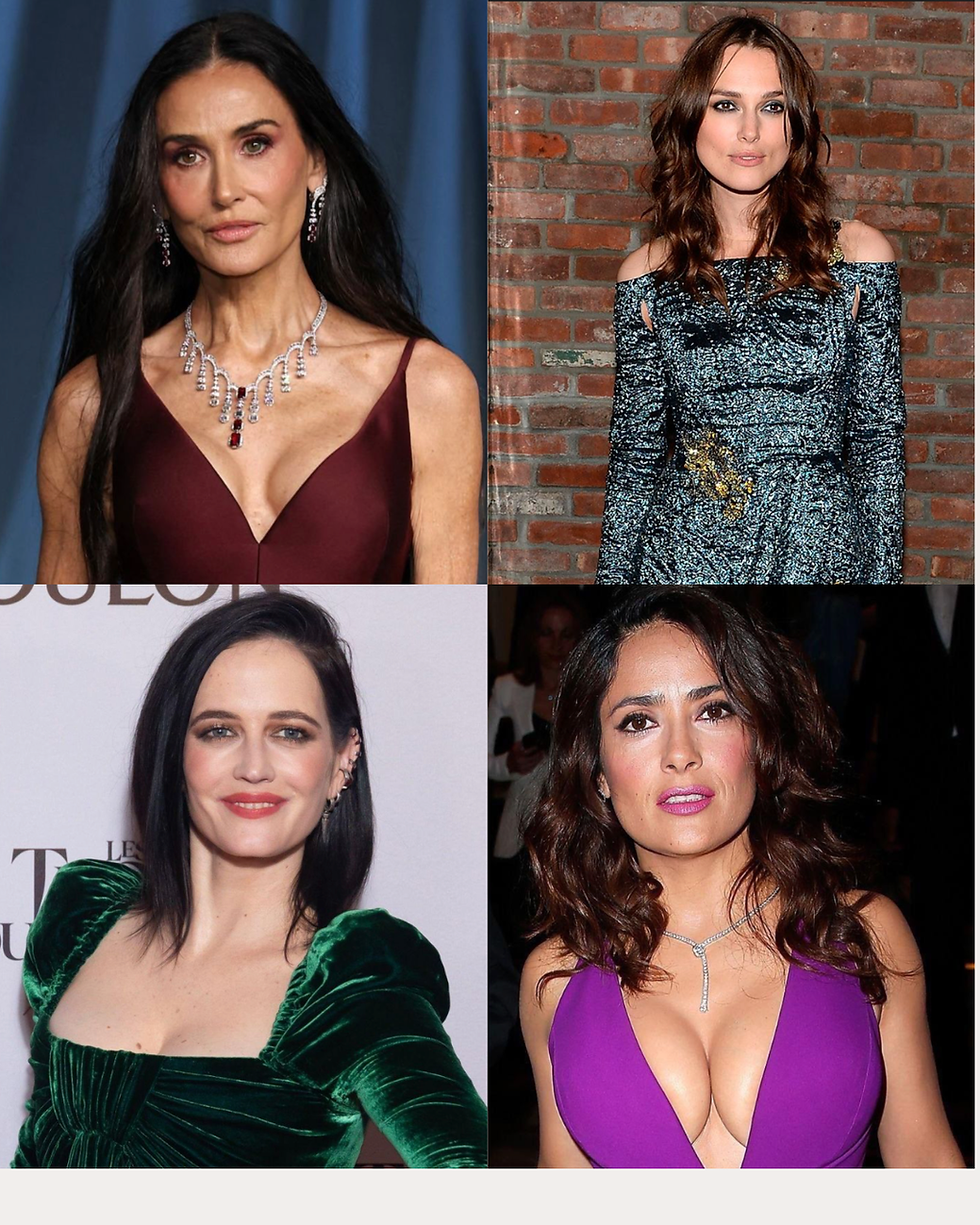
And if you simply cannot be parted from black, consider what you add to it. An unexpected detail (vibrant jewellery, a contrasting shoe, even something as unusual as a print or embellishment) can take black to memorable.
Black on Warm Colouring: Marigold, Rudbeckia — and Why It's Different
Madonna — a warm type — looks stunning in black, always. It brings a lot of deliberate drama to her looks.
Eva Mendes — warm, golden, glowing — in black creates an entirely different effect to Keira Knightley in black. The contrast between warm golden skin and true black feels deliberate and sensual.
Kate Hudson — her golden halo is so similar to her famous mum's! Celebrity Complexion Comparisons Via Their Colour Analysis Results
Black on her warm skin creates a kind of dramatic tension that cool-toned people in black simply don't produce.
Rosie Huntington-Whiteley — warm-toned, golden — in black is a statement in the most complete sense of the word.
This is what black does on warm colouring that it doesn't do on cool: it creates maximum contrast that creates maximum impact.
Is it the most complimenting choice in the harmony sense? Not necessarily. We agree that rich warm burgundy or deep olive on Rudbeckia might make the skin glow more consistently and a warm teal on Marigold might make the eyes look more vivid.
But there are occasions — a party, a big night, a moment you want to own — where impact matters more than harmony, don't you agree?
When Warm Undertones Should Wear Black
Black works best for warm undertones when:
You want to make a statement rather than blend in. The contrast that black creates on warm skin is a feature. If your intention is to walk into a room and be noticed, black delivers that.
The occasion calls for drama. Evening events, parties, galas, significant occasions — anywhere the mood is heightened and the expectation is dressed-up. Black on warm skin reads as deliberate and confident in these contexts.
You balance it with warmth elsewhere. Gold jewellery. Warm makeup: a golden highlight, a warm lip, a bronzed glow. These warm details against black create a connection between your colouring and the colour, so the overall picture feels intentional.
The silhouette and fabric do the work. Black on warm skin benefits from cut, texture and detail more than black on cool skin. A beautifully cut black dress on warm golden skin looks extraordinary. A flat, shapeless black basic can look slightly draining. Let the garment itself carry some of the visual interest.
You're a Rudbeckia or deeper Marigold type. The deeper the warm undertone, the more naturally black sits. Rudbeckia types have the most depth among the warm Colour Flowers — and the more depth you have, the less stark the contrast between warm skin and black clothing becomes. Rudbeckia in black can look genuinely powerful.
When Warm Undertones Might Want to Think Twice
Black is less ideal for warm undertones when:
The occasion is daytime or low-key. The dramatic contrast of black on warm skin is best suited to evening and event contexts. In daytime or casual settings, it can feel heavy or slightly incongruous.
You're a Buttercup type. Buttercup is the lightest warm Colour Flower — delicate, bright, airy. Black can feel very heavy against light warm colouring, particularly near the face. If you're a Buttercup and you love black, keep it away from the neckline.

You want to look rested rather than powerful. Black near the face on warm undertones can occasionally accentuate shadows or create a slightly stark effect rather than a lifted one — particularly in certain lights. If your priority is looking fresh and glowing rather than dramatic, a deep warm colour near the face will usually serve you better.
What Colours Are More Flattering Than Black for Warm Undertones?
If black feels too stark but you still want depth and drama for an occasion, these are the colours that give warm undertones the same sense of event dressing with more harmony:
Deep warm burgundy — rich, dark, and warm in base. Creates depth without the coolness of black. On warm undertones, deep burgundy looks luxurious and intentional.
Rich warm olive or forest green — one of the most powerful shades for warm types at an event. Dark enough to feel sophisticated, warm enough to harmonise beautifully.
Deep warm teal — with warmth rather than cool in the base. Vivid, deep, striking, and completely complementary to warm undertones.
Chocolate brown — a deep, rich warm neutral. Not the most conventional event colour, but in the right fabric — silk, velvet, satin — it looks genuinely extraordinary on warm skin.
Deep warm copper or bronze — for occasions where you want to lean fully into the warmth of your colouring, these shades create an effect that black simply cannot: you look lit from within.
Read also:
Frequently Asked Questions
Does black suit warm undertones?
Yes — but it creates contrast rather than harmony. On warm undertones, black is a statement colour rather than a natural one. It looks powerful and dramatic rather than effortless and refined. Whether that's the effect you want determines whether it's the right choice.
Is black good for olive skin?
It depends on whether your olive skin is warm or cool. Cool olive skin handles black quite naturally — it sits in harmonious territory. Warm olive skin creates a striking contrast with black that can look powerful and deliberate. For warm olive types, gold jewellery and warm makeup details bridge the contrast beautifully.
Can an Autumn type wear black?
Yes. Autumn types — Rudbeckia and Marigold in the Zazu Feu system — can absolutely wear black. Rudbeckia in particular, being the deepest warm type, wears black with the most ease among warm Colour Flowers. The effect is dramatic and powerful rather than harmonious and natural.
Does black make warm skin look washed out?
It can, in certain contexts — particularly in daytime light or without warm makeup to balance it. The contrast of black against warm skin can occasionally accentuate shadows near the face. Evening light is far kinder to this combination, which is one of the reasons black on warm skin looks best for evening occasions.
Is black better than navy for warm undertones?
For warm undertones, a warm navy — one with a slight teal or blue warmth rather than a pure cool base — is generally more harmonious than black. It provides depth without the stark contrast. But for occasions where contrast and impact are the goal, black is the stronger choice. They serve different purposes.
Should warm undertones wear black to weddings?
As a guest, absolutely — if it's an evening wedding or the dress code calls for it. Black at a wedding is now widely accepted, and on warm undertones it can look stunning with the right jewellery and makeup. As always, context matters: a daytime garden wedding calls for different choices than a formal evening reception.
Can deep colour types wear colours other than black?
Very much so — and sometimes more memorably than black. Deep warm types (Rudbeckia) look extraordinary in rich olive, warm teal, deep burgundy and terracotta. Deep cool types (Hellebore) can look even more striking in deep jewel tones — emerald, sapphire, vivid raspberry — than in black, precisely because those colours are unexpected.
What colour is more flattering than black for warm undertones?
Deep warm burgundy, rich warm olive, deep warm teal, and chocolate brown all give warm undertones the depth and sophistication of black with significantly more harmony. For occasions where you want to glow rather than contrast, these are almost always the stronger choice.
Black isn't a colour reserved for one type of person. It's a colour that creates different effects on different complexions and understanding that difference is far more useful than a blanket rule about who can and cannot wear it.
On cool, deep colouring, black feels timeless and elegant. On warm, golden colouring, it becomes a bold and dramatic choice.
The secret isn't deciding whether you can wear black. It's understanding what you want black to say about you.
Take our free colour analysis quiz to find your Colour Flower — or find out more about our online colour analysis based in UK and submit your draping photos to get a precise, personalised result.
Zazu Feu is a colour analyst based in the UK, offering online colour analysis using the unique Colour Flowers system.

