Can You Be Deep Autumn or Deep Winter If Your Skin Is Pale? Let's Find Out

Updated: Jun 22

If you've been trying to work out your colour season and keep landing somewhere between Deep Autumn and Deep Winter, but then second-guessing yourself because your skin is pale, you're exactly like many of our fair skin tone clients before them submitting their draping photos for our colour analysis services. It's one of the most common points of confusion in colour analysis in general, and it makes complete sense why.
The words "deep" and "dark" sound like they should belong to darker skin tones. But that's not how the system works, and understanding why is really important. Let's go in more detail here.
Why Pale Skin and a Deep Season Aren't a Contradiction
The "deep" in Deep Autumn and Deep Winter doesn't refer to the depth of your skin colour really. It refers to the dominant quality of your overall colouring: specifically, that depth and richness is the most prominent characteristic of the way you look.
And here's the thing: you can have pale skin, or rather light skin, but it will never be quite the same as the light skin tone of the light colour types. To convey the depth of your skin tone precisely we wouldn't use watercolours like we would with light colour seasons, your complexion, even when it's fair and bright, belongs to the rich colours of oil paint. Plus, this depth of the colour will most likely be expressed not only in your skin but also in your eyes or hair colour (natural). The darkness in the eyes and hair gives even more intensity, even if your eye colour is blue or green and hair colour is dark blonde.
This is one of the most important things colour analysis teaches: your season is about the relationship between all your features, not any single one in isolation.
Read my guide on whether you can be a light colour season if your skin tone is dark.
What I Use Instead Of Deep Autumn and Deep Winter
As in my colour analysis system I don't use seasons, let me introduce you to the Colour Flowers which are much more fun and contemporary alternative to the seasonal system which was created more than forty years ago:

Periwinkle -
Light & Cool
Colour Flower
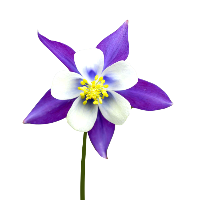
Columbine -
Mid-tone & Cool
Colour Flower

Hellebore -
Deep & Cool
Colour Flower

Buttercup -
Light & Warm
Colour Flower

Marigold -
Mid-tone & Warm Colour Flower

Rudbeckia -
Deep & Warm
Colour Flower
As you can see the deepest Colour Flowers are Hellebore (cool undertone) and Rudbeckia (warm undertone). In Zazu Feu's system it doesn't matter how saturated your colour are, so every Colour Flower has hundreds of variations, just like in nature, and one of them is yours.
You can easily discover your Colour Flower with our complimentary colour analysis quiz:
What Actually Makes Someone a Deep Autumn or Deep Winter?

Both Deep Autumn and Deep Winter or Rudbeckia and Hellebore are defined by depth as the dominant characteristic which means that the most striking thing about your colouring is its richness and intensity. Where they differ is in undertone.
Deep Autumn (Rudbeckia) leans warm. It sits at the intersection of Autumn and Winter, with warm and earthy richness. This type looks best in colours that are deep and warm: dark chocolate, rich olive, burnt sienna, warm burgundy, deep teal with a warm cast.
Learn more about Rudbeckia's colour palette here.
Deep Winter (Hellebore) leans cool. It sits at the intersection of Winter and Autumn too, sharing the depth but pulling cooler colours that feel crisp and dramatic rather than earthy. Deep Winter (Hellebore) types look their best in deep, cool, vivid shades: true black, icy contrast, deep jewel tones, cool burgundy, and rich cool navy.
What both have in common is that they need depth in their colours. Too light shades (pastels), that are meant for the light colour seasons, tend to wash them out — including those with pale skin — because the colours lack the intensity to match the vividness of the eyes and hair.
Learn more about Hellebore's colour palette here.
Can You Really Be Deep Autumn With Pale Skin?
Yes, and it's more common than people realise.
The typical Deep Autumn (Rudbeckia) is often pictured with olive or medium-to-dark skin, deep warm brown eyes, and rich dark hair. But atypical Deep Autumns (Rudbeckias) exist, and pale skin is one of the most common "atypical" features. What stays consistent is the warmth of the undertone and the depth of the eyes and hair.
A pale Deep Autumn (Rudbeckia) might have:
Ivory or light skin that looks slightly golden or peachy in warm light, or that tans relatively easily despite being fair
Olive skin? Read my guide on how to determine whether your olive skin cool or warm.
Hair with neutral or warm tones (from dark blonde to dark brown)
Deep, warm-toned eyes — brown, dark hazel, or deep olive-green
An overall look that feels rich and grounded rather than delicate or airy
If you put this person in soft pastels or light, muted colours, they tend to look washed out or ill, despite having pale skin. Put them in rich, earthy, warm-deep shades and everything clicks into place. The colours meet the intensity of their eyes and hair and the whole picture becomes cohesive.
Discover whether you are a Rudbeckia (Deep Autumn) with our complimentary quiz:
Can You Really Be Deep Winter With Pale Skin?
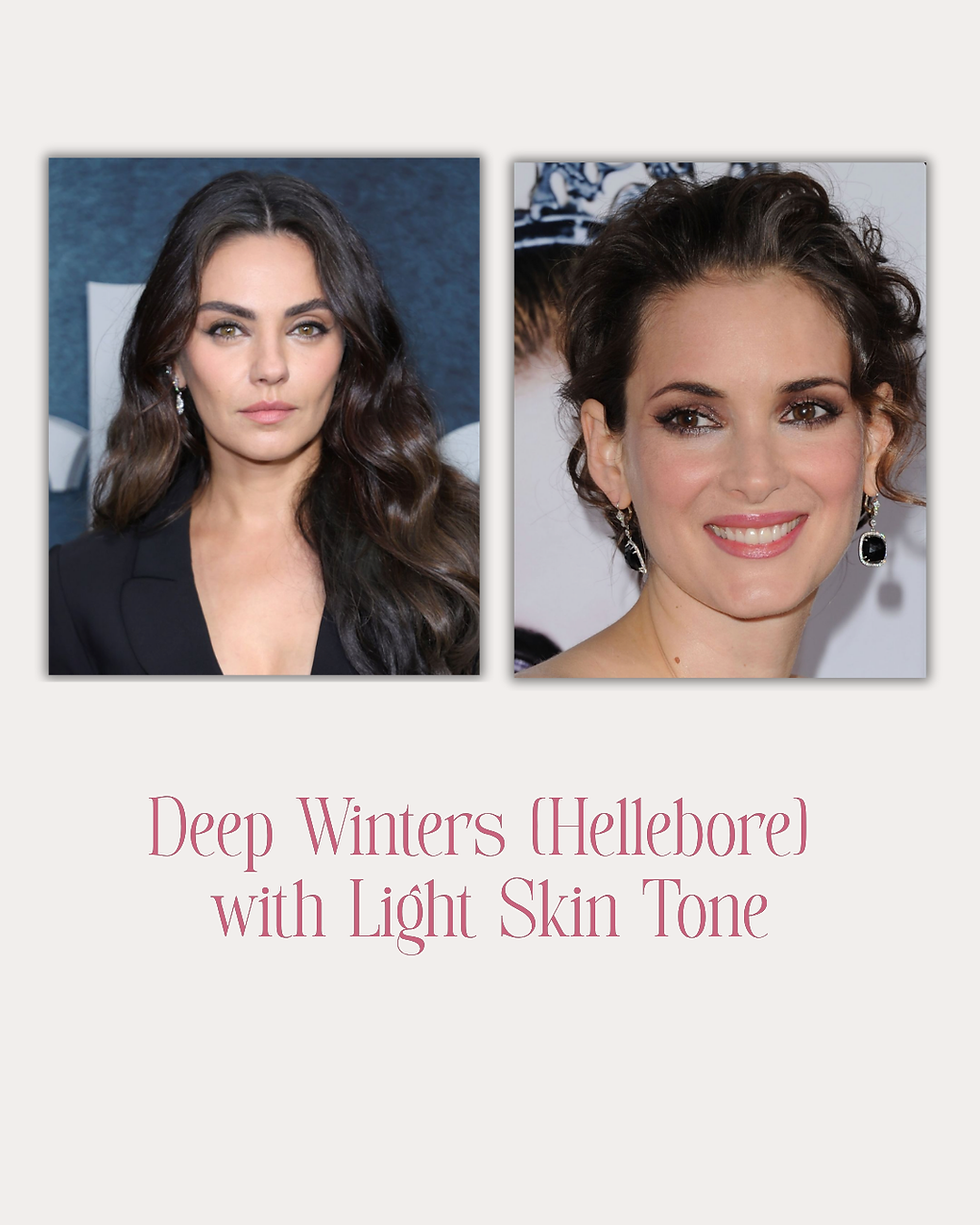
You absolutely can, and in some ways, pale skin with deep colouring is almost a hallmark of certain Deep Winter (Hellebore) types.
Think of the classic Snow White colouring: very pale, almost porcelain skin with cool undertones, very dark hair, and vivid or striking eyes. That high-contrast, cool-deep combination is quintessentially Deep Winter (Hellebore).
A pale Deep Winter might have:
Fair skin with cool undertones (a slight pink, bluish, or neutral quality rather than golden)
Read my guide on how undertone affects hair colour choices.
Ash (mousy) brown to black hair
Eyes that have depth: if they are blue they are dark, have a lot of grey and deep blue shades
Complexion that is definitely dark overall
The colours that suit a Deep Winter (Hellebore) are deep and cool-toned shades like black, cool burgundy, deep jewel tones, or cool magenta. They have their own palette of colours that look light on them that look mid-tone on other colour types.
Discover whether you are a Hellebore (Deep Winter) with our complimentary quiz:
How to Tell Deep Autumn and Deep Winter Apart If Your Skin Is Pale
This is where our clients with pale skin often get stuck because without the visual cue of skin tone to guide them, the distinction between warm and cool can feel hard to pin down. Here are the most reliable way to check:
Try both palettes on. Hold a rich warm terracotta or deep warm olive near your face, then try a cool vivid burgundy or deep jewel blue. One will make your skin look clearer and your eyes more vivid.
Or
Think about which colours have always worked. Deep Autumns (Rudbeckia) often find themselves drawn to earthy, warm-rich shades without knowing why. Deep Winters (Hellebore) often feel most themselves in black and find that cool, vivid shades make them look fresh and glowing.
Find your colour season yourself by using our guide without booking the service:
Why Pale Skin Can Make This Harder to Self-Diagnose
One of the reasons pale-skinned people with deep colouring struggle with colour analysis is that a lot of online content: quizzes, guides, comparison photos, defaults to illustrating deep seasons with darker skin tones. If you're pale and looking for examples that look like you, they can be genuinely hard to find.
If you've tried to work out your season at home and keep going in circles between Deep Autumn (Rudbeckia) and Deep Winter (Hellebore), or keep doubting yourself because your skin doesn't match the typical examples, that's not a reflection of you doing it wrong. It's a genuine limitation of self-analysis, and it's one of the most common reasons people seek a professional help.
Meet our client, whose colour analysis case we described here, Alexandra, who has a beautifully light skin tone and is a Rudbeckia (Deep Autumn).

Regardless of her fair complexion, Alexandra looks best in the deep warm colours such as ochre, warm teal, and beautiful copper. Submit your draping photos in our submission form to find out whether Alexandra's best colour palette is yours too!
We offer three personal colour analysis services: Bloom (perfect to start), Blossom (our most popular package) and Flourish (for colour devotees). Learn more about them here:
The Zazu Feu Approach to Deep Colouring
In my Colour Flowers system, depth is one of the key characteristics I look at but always in relation to undertone. This means that a pale person with deep, warm eyes and hair is assessed on the full picture of their colouring, not assumed into a season based on how light their skin is.
Many of my clients with pale skin have been surprised to discover they suit rich, deep, saturated colours far better than the soft or light shades they'd been defaulting to. Once you know your Colour Flower, getting dressed becomes considerably simpler because you stop reaching for things that look almost right and start choosing from what actually works.
If you'd like to find out whether you're a deep type — and which one — I offer professional online colour analysis available worldwide. You can learn more about all the colour analysis services I offer here:
Not sure yet?
You can also read my guide on how to do your own colour analysis at home as a starting point.
Zazu Feu is a colour analyst based in the UK, offering online colour analysis sessions using the unique Colour Flowers system.