Can Cool Undertones Wear Orange? The Honest Colour Analysis Answer
Updated: 3 days ago

Orange is one of those colours people love to dismiss immediately, almost as if its arrival in their lives would be like a maniac with a chainsaw.
And no wonder — we so often associate this colour with Halloween, or rather with cheesy, cheap decorations that will eventually end up in an orange pile of rubbish somewhere outside of town.
But orange can be different, right? What about the shade of autumn leaves? Or of a pumpkin? Terracotta. Sunset. A chunky, cheeky Persian cat.
Orange is an excellent colour and we should wear it. But how?
The answer, as with most colour questions worth asking, lies in colour analysis. And more specifically, in understanding your undertone because orange is one of the most undertone-sensitive colours in the entire spectrum. Get the shade right for your specific colouring and it can be one of the most flattering, alive, and attention-commanding choices you make. Get it wrong and it fights with your skin in a way that's immediately visible, even if you can't quite put your finger on why.
Discover whether orange is for you with the free colour analysis quiz:
Why Orange Colour Is So Hard To Wear
It's difficult for us to wear orange easily because it is neither yellow nor red. This colour lives somewhere in between, which makes it emotionally charged with both. It carries the joy and cheerfulness of yellow, but also the passion and vigour of red. It's a colour that never disappears from view and that persistence is exactly what some people find difficult to deal with.
From a colour analysis perspective, orange is also one of the warmest colours on the spectrum. Unlike red, which has both warm and cool versions (think tomato red versus cool burgundy), orange is almost always warm. There is no cool orange. Which means that orange, by its very nature, sits most naturally against warm skin undertones and creates a clash of varying degrees against cool ones.
This doesn't mean cool-toned people can never wear orange. But it does mean that the shade, depth and placement of orange matter considerably more for cool types than for warm ones.
Emotional Associations With Orange Colour
However, across studies in colour psychology, orange is consistently linked to positive traits:
Warmth
Sociability
Creativity
Appetite
Optimism
Emotional openness
It's no coincidence orange is used in food branding, hospitality, and spaces meant to feel welcoming. The brain reads orange as life-supporting.
This psychological warmth is part of what makes orange such a powerful choice when it works and such a visually uncomfortable one when it doesn't. A colour that radiates this much energy needs to be in conversation with your natural colouring, not fighting against it.
Read more:
What Is Colour Analysis and Why Does It Matter for Wearing Orange?
If you've never heard of colour analysis before, here's the short version: it's the process of identifying which colours work with your natural colouring — your skin undertone, depth, and contrast — to make you look your most radiant, healthy and harmonious.
Most people have had the experience of putting on an outfit that looked good on the hanger but felt slightly wrong on them. Or wearing a colour that prompted a flood of compliments without knowing why. Colour analysis explains both of those experiences and gives you a framework for replicating the good ones consistently.
The traditional colour analysis system divides people into four seasons: Spring, Summer, Autumn and Winter. It's a useful starting point, but it was developed more than forty years ago and has real limitations, particularly for people whose colouring doesn't fit neatly into one of four broad categories.
At Zazu Feu, we use a different system. And when it comes to a colour as undertone-sensitive as orange, that difference matters.
Why Zazu Feu Uses a Different System
At Zazu Feu, we don't use seasonal colour analysis. Not because the seasonal system isn't useful as a starting framework — it is — but because it doesn't give enough precision for most people to actually use their result in practice.
Instead, we use the Colour Flowers — a contemporary approach to colour typing that identifies six specific types based on two factors: undertone (warm or cool) and depth (light, mid-tone or deep). Named after flowers that embody each type's qualities, the system gives a more nuanced, more precise result than four seasons and one that works across a much wider range of skin tones and complexions.
The six Colour Flowers are:
Periwinkle — Light & Cool
Columbine — Mid-tone & Cool
Hellebore — Deep & Cool
Buttercup — Light & Warm
Marigold — Mid-tone & Warm
Rudbeckia — Deep & Warm

Understanding your Colour Flower doesn't just tell you whether to go warm or cool. It tells you how light or deep your colours should be, which shades within a colour family flatter you, and — crucially for this post — which version of orange, if any, belongs in your wardrobe.
Not sure which Colour Flower you are? Take our free colour analysis quiz — it takes just a few minutes and gives you a starting point before we dive into the orange question.
Read later:
Orange for Warm Undertones
Buttercup — Light & Warm
Marigold — Mid-tone & Warm
Rudbeckia — Deep & Warm

Buttercup -
Light & Warm
Colour Flower

Marigold -
Mid-tone & Warm Colour Flower

Rudbeckia -
Deep & Warm
Colour Flower
Warm Zazu Feu Colour Flowers, on the other hand, are here to own orange. And that's no surprise — orange is a truly warm colour. On warm skin, orange doesn't look foreign or forced. It mirrors the warm undertones of the skin, echoes the warmth in the eyes and hair, and creates a sense of cohesion rather than contrast.
The difference between the three warm types is in the shade and depth of orange that suits each one — because even within warm colouring, not all oranges work equally well for everyone.

Buttercup — Light & Warm: If you're a Buttercup, reach for subtle oranges — peach, soft coral, gentle apricot tones. Buttercup is the lightest warm type, and the best orange for this colouring is light enough to match that delicacy. Very vivid, very saturated orange can overwhelm Buttercup colouring — the lightness of the type needs a lighter version of the colour. Think sunrise rather than midday sun.
Marigold — Mid-tone & Warm: If you're a Marigold, mid-tone oranges are your territory — warm apricot, glowing orange, balanced and alive. Marigold types have the depth to carry a more vivid orange than Buttercup, without needing the very darkest, earthiest shades. A true, clear, warm orange — the kind you might see on a summer market stall — belongs to Marigold in its most natural form.
Rudbeckia — Deep & Warm: If you're a Rudbeckia, your oranges are deeper and earthier: terracotta, pumpkin, baked clay. As the deepest warm type, Rudbeckia needs depth in its colours — a bright, pale orange can look slightly thin or washed out against the richness of deep warm colouring. The deeper, more complex versions of orange are where Rudbeckia comes alive.
Olivia Palermo (download free Olivia Palermo's style guide) — dark and warm, a Rudbeckia — looks extraordinary in dark, complex orange shades. Her deep warm colouring meets the earthiness of deep orange beautifully, creating a cohesive, rich, powerful look. This is warm colour analysis working exactly as it should.

Warm Zazu Feu colour flowers, on the other hand, are here to own orange. And that’s no surprise — orange is a truly warm colour. On warm skin, orange doesn’t look foreign or forced. It mirrors the warm undertones of the skin, echoes the warmth in the eyes and hair, and creates a sense of cohesion rather than contrast.
If you’re a Buttercup, reach for subtle oranges: peach, soft coral, gentle apricot tones. If you’re a Marigold, mid-tone oranges are your territory — warm apricot, glowing orange, balanced and alive.
If you’re a Rudbeckia, your oranges are deeper and earthier: terracotta, pumpkin, baked clay.
Which Colour Season Looks Great In Bright Orange Colour
Bright orange looks best on Marigold — especially when their brightness exceeds the medium range. Think of someone like Cameron Diaz or Beyonce. Their complexion is truly radiant and warm. They both have enough depth to sit comfortably in Marigold, and enough saturation to carry strong, warm shades without being overwhelmed. It's the only situation in which bright orange doesn't overpower the wearer.

For everyone else — including warm types — the rule is simple: the further you sit from the medium-warm midpoint of the Colour Flowers system, the more you need to adjust your orange. Lighter warm types need lighter, softer oranges. Deeper warm types need richer, earthier ones. And cool types need to tread carefully regardless of depth.
Shades of Orange for Cool Undertones
Orange is traditionally the colour for warm undertones. Speaking from the point of view of traditional colour analysis, it's a Spring and Autumn colour and in our Colour Flowers system, it belongs most naturally to the warm types. But cool undertones aren't entirely locked out — they just need to choose very carefully, just the same as with beige.
Periwinkle — Light & Cool
Columbine — Mid-tone & Cool
Hellebore — Deep & Cool

Periwinkle -
Light & Cool
Colour Flower
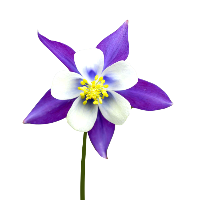
Columbine -
Mid-tone & Cool
Colour Flower

Hellebore -
Deep & Cool
Colour Flower
Periwinkle and Hellebore can sometimes get away with certain orange-adjacent shades that fit their palettes — though even then, it will never be perfect.
For Periwinkle, this might mean an ever-so-subtle coral — the lightest, most pink-leaning version of orange that sits closest to the cool side of the spectrum. Think barely-there peach rather than anything vivid or clearly orange.
For Hellebore, a deep blood orange can work better than expected. The depth in Hellebore colouring gives it the capacity to carry a very dark, very rich version of orange — one that has moved closer to burgundy-red than to tangerine. This is orange in its most muted, most complex form.
Columbine, however, needs to think twice before wearing orange at all.
The best possible option for Columbine would be a mid-tone orange with a strong red base or orange that is almost neutral. But even then, it will still clash with their appearance. Why? Because Columbine is, first and foremost, cool. Not light, not dark but cool. Coolness is a defining characteristic of this type, and warm colours fundamentally fight against it. Orange, being unapologetically warm, disrupts Columbine's colour harmony rather than supporting it. For this type, orange is best kept away from the face and used sparingly, perhaps as a small accessory rather than a dominant colour.

The practical advice for all cool types considering orange: if you love the colour and can't be parted from it, keep it below the waist and balance it with a cool neutral near your face. A cool navy or soft grey near the neckline will create distance between the warmth of the orange and the coolness of your undertone, making the combination work better than it otherwise would.
How to Wear Orange: Practical Tips by Colour Flower
Understanding your Colour Flower tells you which shade of orange works but knowing how to wear it is equally important.
Start with accessories if you're unsure. An orange bag, scarf or shoes introduces the colour without committing to it at the face level. This works particularly well for cool types experimenting with orange-adjacent shades.
Match the depth of your orange to your colouring depth. Light types in vivid orange, or deep types in pale peach, both create a mismatch. The depth of the colour should broadly match the depth of your natural colouring.
Pay attention to what happens near your face. An orange top or blouse is a much more significant colour analysis decision than orange trousers because colour near the face has a direct and immediate effect on how your skin looks. If in doubt, keep orange below the waist.
Pair orange with neutrals that match your undertone. Warm types look best pairing orange with camel, warm ivory, chocolate brown or warm teal. Cool types, if wearing an orange-adjacent shade, look better balancing it with cool navy, charcoal or crisp white rather than warm neutrals.
Use orange as a confidence colour. Because orange has such strong psychological associations with warmth and sociability, wearing it when it works with your colouring creates a particularly strong impression. On the right type, it's genuinely one of the most memorable colour choices there is.
How to Find Your Best Shade of Orange

The most reliable way to find your best shade of orange is to try different versions in natural light near your face, without makeup if possible. The shade that makes your skin look clearer, your eyes more vivid, and your overall appearance more cohesive is the right one. The one that makes you look slightly tired or slightly washed out is the wrong one. The difference is usually visible immediately.
If you'd like professional guidance — not just on orange but on your complete palette across clothing, makeup, hair and accessories — I offer professional online colour analysis for clients across the UK and worldwide. All conducted personally, never by AI.
You can read more about how to find your undertone in our guide to doing your own colour analysis at home — which is a useful starting point before exploring orange specifically.
Our Colour Analysis Services
Once you know your Colour Flower, every colour decision — including orange — becomes considerably simpler. You stop guessing and start choosing with confidence.
At Zazu Feu, we offer three personal colour analysis packages:

Bloom — our starting package, perfect for getting a clear, professional Colour Flower result. From £45.
Blossom — our most popular package, with comprehensive guidance across clothing, makeup and hair.
Flourish — our most detailed package for those who want to go deep into their palette.
All sessions are conducted online — fill in the submission form to get started, or take the free quiz first if you'd like a sense of your Colour Flower before committing.
FAQs
Can cool undertones wear orange?
Cool undertones can wear certain orange-adjacent shades — but pure, vivid orange is one of the most difficult colours for cool types. Periwinkle types may get away with a very subtle coral. Hellebore types can sometimes carry a very deep, earthy blood orange. Columbine types are best keeping orange away from the face entirely. If you love orange and have cool undertones, keep it below the waist and balance with cool neutrals near the face.
What shade of orange suits warm undertones?
It depends on your depth. Buttercup types suit light, subtle oranges — peach, apricot, soft coral. Marigold types suit vivid, mid-tone orange in its most classic form. Rudbeckia types suit deep, earthy oranges — terracotta, pumpkin, baked clay. The deeper your warm colouring, the deeper and earthier your best orange.
Is orange a warm or cool colour?
Orange is almost entirely a warm colour — unlike red or pink, which have both warm and cool versions, orange doesn't have a genuinely cool version. This is why it sits most naturally on warm undertones and creates varying degrees of clash on cool ones.
What is the best orange for olive skin?
It depends on whether your olive skin is warm or cool. Warm olive skin — with golden-green undertones — suits warm, earthy oranges beautifully: terracotta, pumpkin, warm copper. Cool olive skin, with grey-green undertones, will find orange more challenging and should approach it cautiously if at all. Read our guide on whether your olive skin is warm or cool for more detail.
Can I wear orange to a formal event?
Yes — the key is choosing the right version. Deep, earthy oranges — burnt sienna, deep terracotta, warm copper — read as sophisticated and evening-appropriate in the right fabric. A deep warm Rudbeckia type in a rich terracotta velvet or silk is a genuinely powerful formal look. Vivid, bright orange reads as daytime; deep, complex orange reads as occasion-worthy.
Why does orange look great on some people and terrible on others?
Because orange is one of the most undertone-sensitive colours in the spectrum. On warm undertones, orange mirrors the warmth in the skin and creates cohesion. On cool undertones, the warmth of orange fights with the coolness of the skin and creates a clash. The difference is visible immediately — which is why orange polarises people so strongly.
What colours go with orange?
For warm types: camel, warm ivory, chocolate brown, warm teal, olive green. These warm neutrals sit harmoniously with orange and create a cohesive, earthy look. For cool types experimenting with orange-adjacent shades: cool navy, charcoal, or crisp white — the cool neutrals balance the warmth of the orange rather than amplifying it.
Does orange suit fair skin?
It depends entirely on undertone rather than depth of skin. Fair skin with warm undertones — a Buttercup type — can look beautiful in soft, warm oranges like peach and apricot. Fair skin with cool undertones will find orange more challenging and should approach it cautiously. Read our guide on what colours suit fair skin for more specific guidance.
Not sure which Colour Flower you are? Take our free colour analysis quiz to find out — or browse our professional colour analysis services for a personalised result. Fill in the submission form to get started.
Zazu Feu is a colour analyst based in the UK, offering professional human-led online colour analysis using the unique Colour Flowers system.