How to Look Good in Vintage Clothes (Without Looking Like You’re in Costume)

Updated: Jun 30

Vintage clothes have magic. The tailoring, the fabrics, the detail... I get it all.
Pieces from the 40s, 50s, 70s or 90s carry personality that modern fast fashion often lacks. But let’s be honest, sometimes vintage can wear you instead of the other way around.
So how do you look chic in vintage, not like you’re heading to a themed party?
I believe the secret isn’t just the decade.
Start With Color, Not Era For Vintage Inspired Outfits
Most people choose vintage based on silhouette or decade. But the first thing anyone notices is colour. And this is where many vintage looks go wrong.
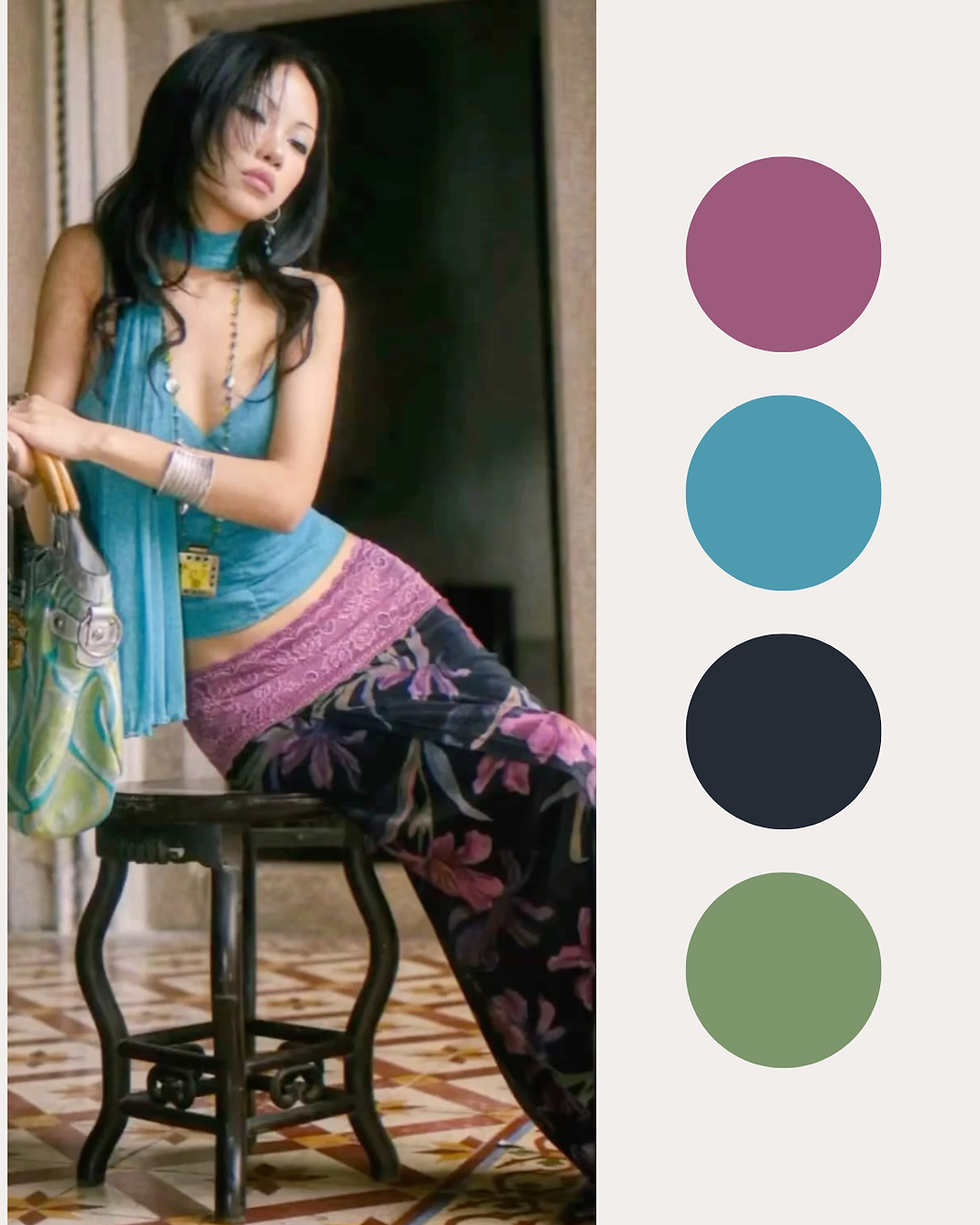
Vintage shops are full of strong tones: mustard, rust, olive, deep teal, dusty rose. Beautiful but very tricky.
When the colour is wrong for your complexion, even the most exquisite 1970s dress can make your skin look old and tired. But when the colour is right, even a simple vintage blouse can make you glow.
Learn more:
Inspired by French Vintage Outfit
What Colours Were in Fashion in the 2000s
This is why understanding your personal colouring helps so much. Once you know whether your skin tone looks best in warm or cool tones, soft or bright shades, deep or light palettes, shopping vintage becomes so much easier, more controlled but still fun!

Find Your Colour Type Before You Shop Vintage Clothes
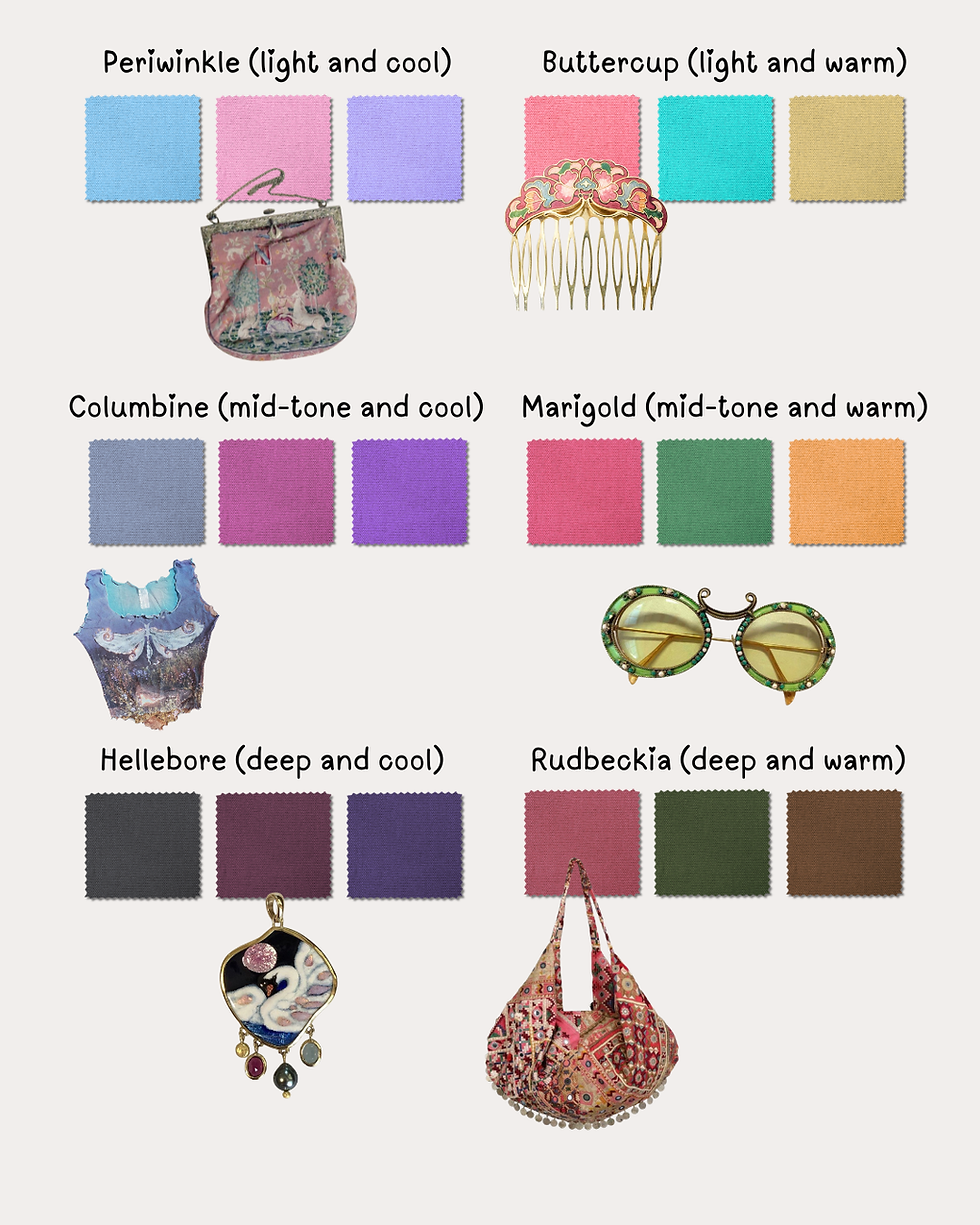
Every colour type below pairs differently with vintage tones and here's a quick guide before you hit the rails:
Periwinkle — light and cool. Look for soft vintage pastels and powder blues rather than mustard or rust.
Columbine — mid-tone and cool. Dusty rose and deep teal vintage pieces tend to suit you beautifully.
Hellebore — deep and cool. Look for richly saturated vintage jewel tones over anything muddy or warm.
Buttercup — light and warm. Warm pastels and soft mustard vintage finds will likely glow on you.
Marigold — mid-tone and warm. Classic vintage rust and olive tones were practically made for you.
Rudbeckia — deep and warm. Lean into bold vintage warm tones rather than anything pale or icy.
Not sure which one you are? Try our Free Colour Analysis Quiz to find the colours that suit your skin tone and make you truly glow. It only takes a few minutes:
Balance the “Vintage” Clothes With the “You”
I love wearing vintage clothes myself and I try to always remember the rule: if you wear a full head-to-toe 1940s outfit with authentic hair and makeup, it becomes costume.
Sure, there's nothing wrong with it if that's your intention but if not, it's better to pair a vintage blouse with modern denim, or a 70s blazer with a simple neutral top that flatters your skin tone. That's when it becomes your own style.
Let your amazing vintage piece be the statement and your natural colouring - the anchor.

In this photo, I'm wearing a skirt I found in a retro shop, paired with an M&S T-shirt, Vans, and sunglasses I bought years ago from TK Maxx. It's one of my favourite outfits for long walks around National Trust gardens — classy, comfy, and perfectly suited for an impromptu swing!
Pay Attention to Fabric Colors Near the Face
This is especially important.
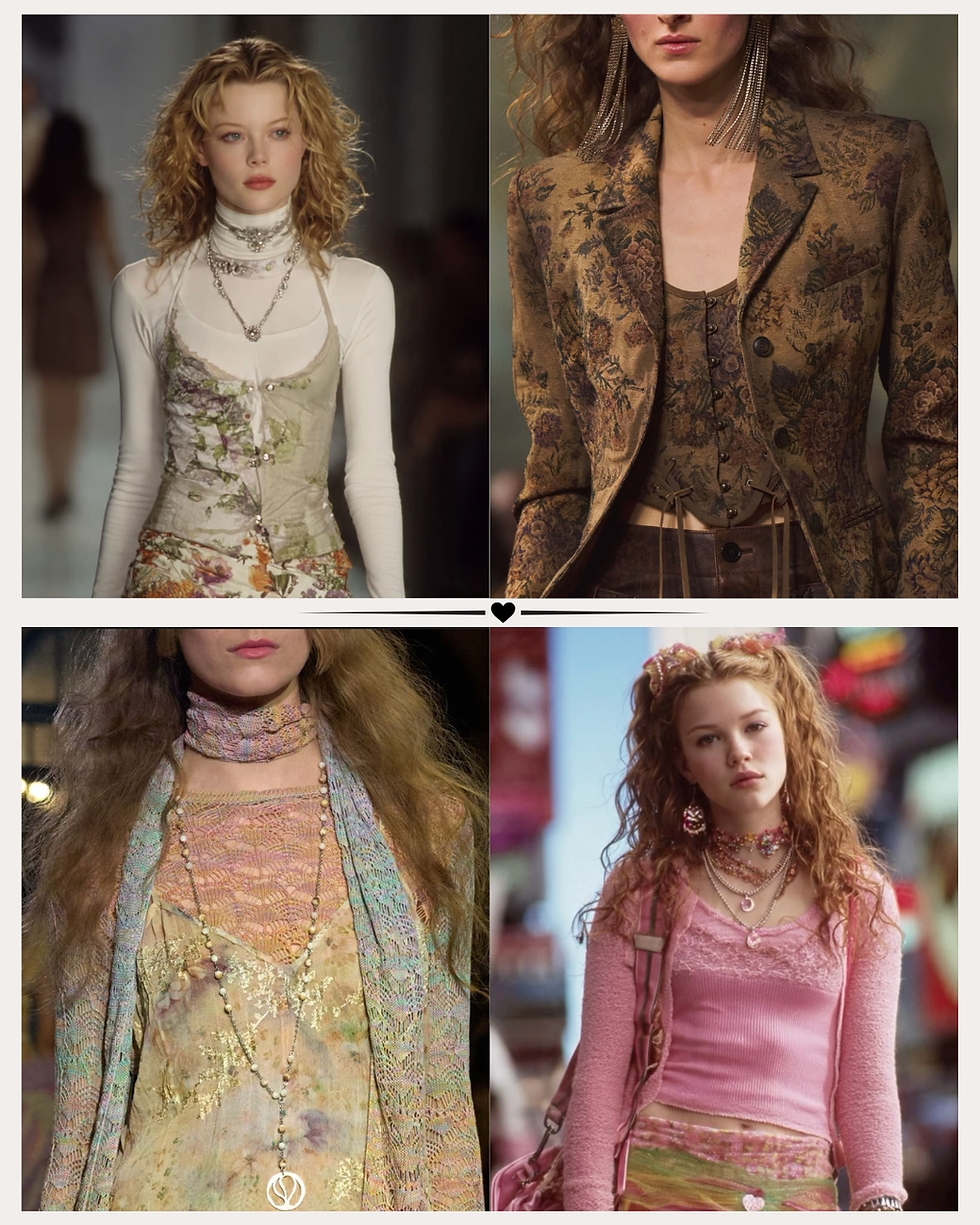
Colours and textures close to your face affect how fresh you look. A vintage polyester in a harsh yellow might overwhelm you, while a softer butter tone might illuminate you. Two garments can look similar on the hanger but completely different on you.
When in doubt, hold the fabric up to your face in natural light. Ask yourself:
Does your skin look clearer?
Do your eyes stand out?
Or do shadows appear?
Your best vintage pieces will enhance you.
Before You Buy: A Quick Vintage Shopping Checklist
Hold the item near your face in natural light before deciding
Ask: does my skin look clearer, or more tired?
Check the shade isn't muddying your complexion, even if you love the silhouette
If the colour's wrong but the shape is right, look for the same cut in a different colourway
Plan to pair the piece with one modern, neutral item rather than going head-to-toe vintage
If in doubt, bring a scarf in your flattering colours to test near your face on the spot

Read also:
Adapt the Shade, Keep the Shape Of Your Favourite Vintage Item
Love the 1970s silhouette but the brown isn’t your colour? Look for the same shape in a shade that harmonises with you.
Adore 90s slip dresses but black drains you? Try it in a soft charcoal, cocoa, or muted berry instead. Or, use my favourite trick: pick your favourite scarf in your recommended colours and wear it on the top!
You don’t have to give up the era you love.
Vintage Style Is About Character
The most stylish people wearing vintage don’t copy the past. They reinterpret it through their own colouring, proportions and personality.
When the colour supports your complexion, the fabric flatters your structure, and the styling feels current.
If you’ve ever wondered why some vintage pieces make you glow and others make you look slightly “off,” it’s all about colour.
And once you understand your most flattering shades, shopping vintage becomes less overwhelming and far more intentional.
The goal isn’t to look like a decade. It’s to look like your unique self.
Find your best vintage colour palette with Zazu Feu's color analysis quiz.
Frequently Asked Questions
What colours are most flattering for vintage clothing?
It depends entirely on your personal colouring rather than the decade. Warm-toned types tend to glow in vintage mustard, rust, olive and warm florals, while cool-toned types usually look fresher in dusty rose, deep teal, periwinkle or jewel tones. The fastest way to find out which applies to you is a proper colour analysis.
How do I know if a vintage piece suits me?
Hold the fabric up near your face in natural daylight, not under shop lighting. If your skin looks clearer and brighter and your eyes stand out, it's likely a good match. If you notice shadows under your eyes, sallowness, or your skin looking tired, the colour is probably working against you, however beautiful the piece is on its own.
Can I still wear vintage black if it's not my colour?
Yes, just not right at your face. Swap a black vintage top or dress for the same shape in soft charcoal, cocoa or muted berry, or keep the black piece but add a scarf or accessory in your flattering colours near your neckline.
Do I need to match my whole outfit to one era?
No, and it's usually better not to. Mixing one standout vintage piece with modern, neutral basics tends to look like personal style rather than costume. Save the full head-to-toe period look for when that's genuinely the intention, like a themed event.
What's the difference between warm and cool undertones?
Warm undertones have a golden, peachy or yellow base to the skin and usually suit earthy, golden-based colours. Cool undertones have a pink, red or blue base and usually suit jewel tones and blue-based shades. The simplest way to find out for certain is to compare how different colours look against your skin in natural light, ideally through a proper colour analysis.